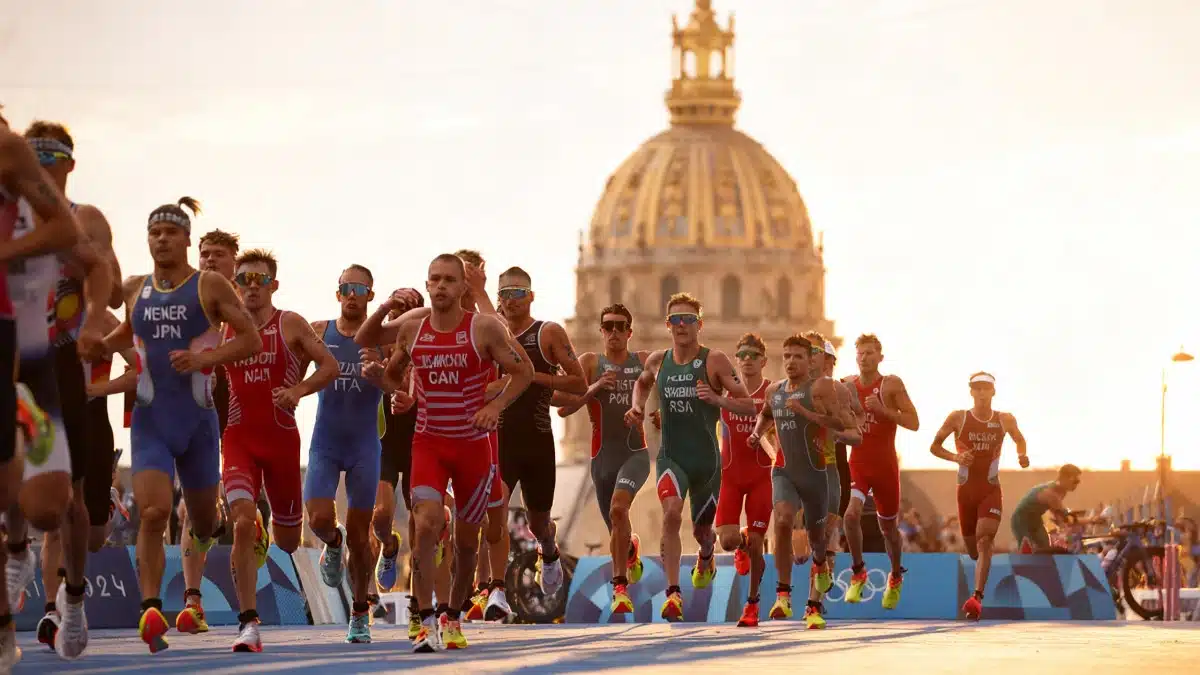
Think a human could outrun a cheetah? Spoiler: we can’t. But if you invited that cheetah to a marathon, you’d better have bandages ready for its pride. Why? Because humans aren’t just wannabe sprinters—they’re the true kings and queens of going the distance. Let’s untangle the quirky science and riveting history behind humanity’s unique ability to run marathons (and, yes, sweat buckets while doing it).
Why Brutes Like the Bison Bow Down to Humans After 42.195 km
If Usain Bolt and a cheetah lined up for a sprint, Bolt’s 44.72 km/h would look like a gentle jog compared to the cheetah’s blistering 110 km/h or even the bison’s beefy 65 km/h. But give it time—let’s say, an Olympic marathon—and the tables turn. Endurance: that’s the superpower where Homo sapiens truly shine.
Scientists have spent four decades sparring over why we humans are so remarkably good at stacking up the miles, something almost unheard of in the mammalian club. The dominant theory? The “persistence hunting” hypothesis. If you picture early humans doggedly stalking prey across prehistoric plains, sweating more than a sauna contest, you’re on the right track.
Persistence Hunting: The Prehistoric Marathon
The basic idea is this: over many eons, humans inherited unique physiological traits allowing them to chase prey to the point of exhaustion. Prey could zip and zoom with wild speed, but hunters played the long game, wearing down animals that could not withstand the unrelenting pursuit.
This theory isn’t just a tale told around the campfire—it’s getting stronger thanks to science. In May 2024, a new study published in Nature Human Behaviour by Eugène Morin and Bruce Winterhalder crunched the numbers. Their conclusion? From an energy perspective, it’s actually more efficient to run than walk (a discipline where humans are bizarrely, even more enduring) if you want to catch lunch. This evidence supports the idea of persistence hunting as an evolutionary driver for our marathon muscles.
But what about proof that hunter-gatherers really practiced this relentless form of pursuit? Morin and Winterhalder dove into historical records—sometimes as far back as the 16th century—and dug up 400 accounts from 272 locations across the globe. The challenge, according to Morin, is the fading of this practice ever since firearms made exhaustion obsolete as a hunting tactic.
- The oldest records date back centuries
- There are over 400 examples from cultures worldwide
- Persistence hunting waned with the advent of guns
What Makes Humans So Uniquely Enduring?
So, case closed? Well, not quite. Humans own some truly odd physical features:
- Huge numbers of sweat glands (hello, personal sprinkler system)
- Relatively hairless skin
- Arched soles
- Springy Achilles tendons
- Slow-twitch muscle fibers for great endurance
But here’s the twist: are these really products of our hunting past, or could they serve everyday walking just as well?
Some scientists are skeptical. Nicholas Holowka, anthropologist at the University at Buffalo and bipedalism evolution expert, suggests endurance running adaptations might just be walking perks in disguise. He wants to spot body traits that clearly favor running without also aiding in walking—a tall order, considering how interconnected our anatomy is.
Harvard’s Daniel Lieberman, a leading advocate for the persistence hunting hypothesis, doesn’t shy away. He notes that although a horse gallops three times faster than a human, it loses over a marathon distance. Lieberman knows first-hand: he’s raced a horse (results presumably more favorable than racing a cheetah). He also points to one underappreciated ally—the gluteus maximus. This big muscle stabilizes runners, so they don’t flap backward with each stride.
Sweat: Humanity’s True Superpower
Perhaps the most unglamorous, yet game-changing, difference is sweat—by the litre. While dogs cool off with panting, humans are like mobile water features. Our ability to dump heat blows the competition away. Ancestors likely timed their hunts for the hottest part of the day, when overheating felines napped in the shade, and sweating humans had their edge.
What gives us this cooling prowess? Nearly naked skin and well-distributed sweat glands. Eugène Morin notes, “A marathon runner can lose four liters of water in one hour. That’s a lot.” Lieberman agrees: by releasing sweat all over (and shedding our Furby suit long ago), we basically turned our skin into one giant tongue, ready to cool down at any pace. “We are the world champions of sweat,” he concludes—and though medal ceremonies for sweating haven’t been invented yet, maybe it’s for the best.
Conclusion: Endurance Isn’t Just for the Fit—it’s the Human Story
From sweaty sun-chasers to Olympic hopefuls, humans are built for endurance. Whether it’s marathon glory or a reminder of our quirky evolutionary gifts, our capacity to go the distance is both scientifically fascinating and, let’s be honest, slightly sweaty. Next time you jog—or just break a sweat—you can thank your ancestors (and perhaps the world’s biggest glutes) for that cool evolutionary edge. Happy running!

John is a curious mind who loves to write about diverse topics. Passionate about sharing his thoughts and perspectives, he enjoys sparking conversations and encouraging discovery. For him, every subject is an invitation to discuss and learn.


